Nobel 1945 · Kepler 1952
Number, and the figure it left.
Kepler
Number
Fludd
Figure
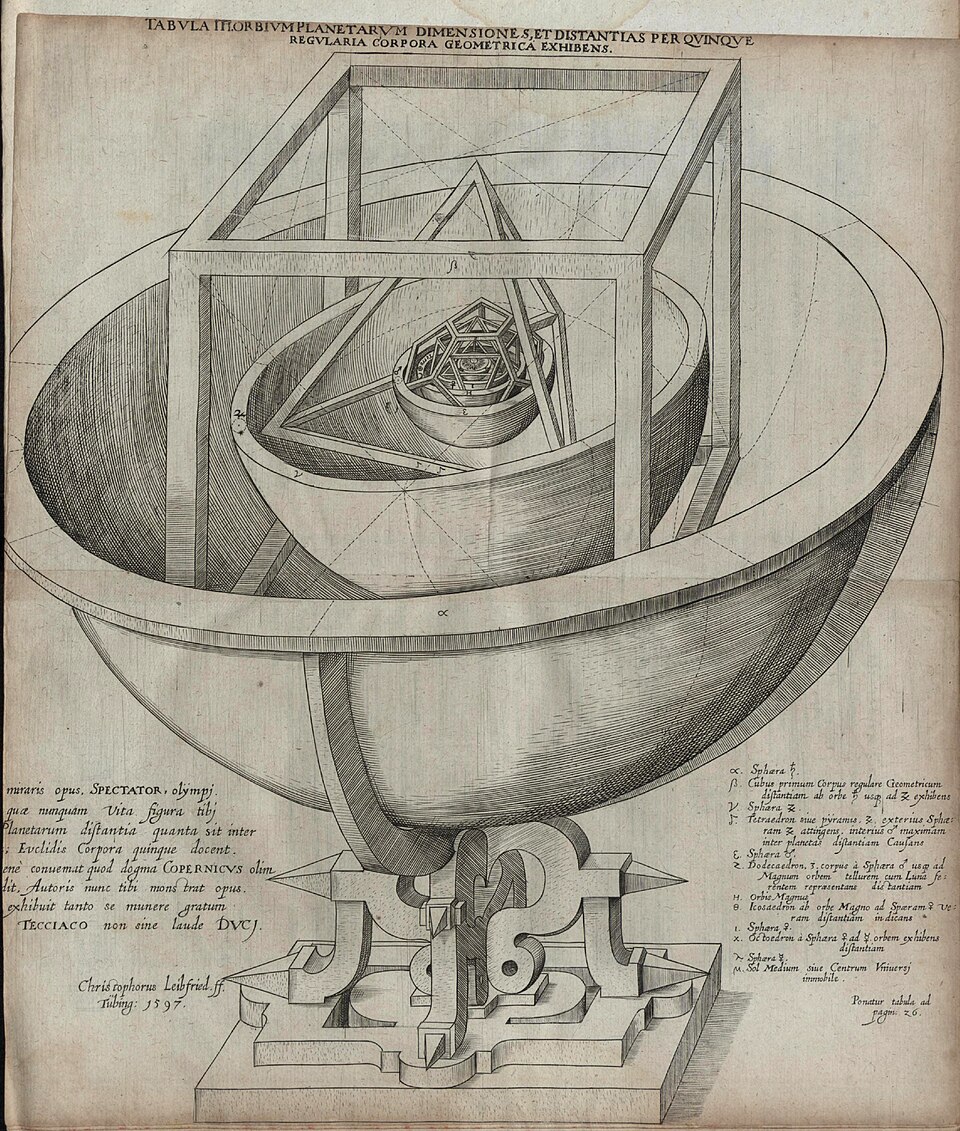
Kepler
Nested regular solids, cut in Tübingen in 1597.
Johannes Kepler, Mysterium Cosmographicum. Public domain.
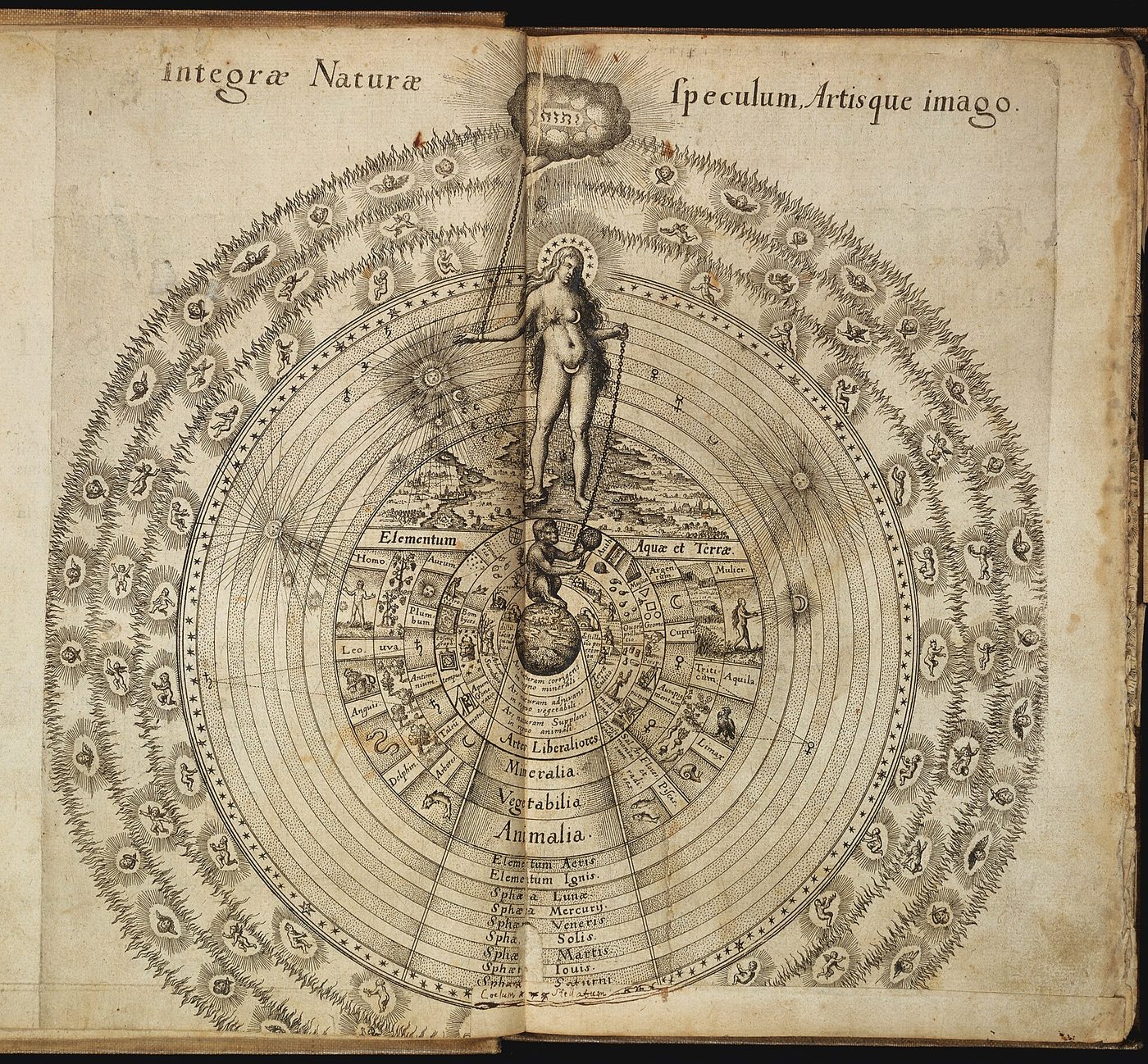
Fludd
Integrae Naturae Speculum Artisque Imago. Oppenheim, 1617.
Robert Fludd, Utriusque Cosmi Historia. Public domain.
Wolfgang Pauli received the Nobel Prize in Physics in 1945 for the exclusion principle, the rule that governs how electrons occupy states. He was inside the science, not visiting it.
In that same 1952 volume he published The Influence of Archetypal Ideas on the Scientific Theories of Kepler. The quarrel is with Robert Fludd. Kepler wanted a sky of number, measure, and harmonies that could be calculated. Fludd still wanted a sky that could be read as a figure.
Pauli does not hand the match to Fludd. Kepler’s mathematics is the astronomy that followed. The essay marks what the victory dropped: a sky exact enough to predict, and a psyche with nowhere to stand inside that exactness. The letters with Jung, later gathered as Atom and Archetype, stay on that hinge. They are not a second career in prediction.